Table of Contents
Quick answer: The most effective adult affiliate content strategy combines review posts (3-5% conversion rate), comparison articles (5-8% conversion), and buyer-intent listicles. Publishing 8-12 articles per month on a niche cam review site with proper internal linking generates compounding organic traffic within 4-6 months.
Key takeaways
- Comparison articles convert at 5-8% because readers are already deciding between platforms.
- Review posts build trust and rank for branded keywords with 3-5% affiliate link click rates.
- Publishing 8-12 articles per month hits the threshold where Google treats your site as an active authority.
- Content calendars should rotate between 40% reviews, 30% comparisons, 20% how-to guides, and 10% listicles.
- Avoid doorway pages, auto-generated content, and keyword stuffing, which get adult sites deindexed faster than mainstream sites.
Content types that convert for adult affiliates
Reviews
Comparisons
How-to guides
Listicles
| Content type | Conversion rate | Traffic volume | Revenue share | Best for |
|---|---|---|---|---|
| Platform reviews | 3-5% | Medium | 35% | Branded keywords, trust building |
| Comparisons | 5-8% | Medium | 30% | Decision-stage users |
| How-to guides | 2-4% | Low-Medium | 15% | Purchase-intent users |
| Listicles | 2-3% | High | 15% | Discovery keywords, top-of-funnel |
| News/opinion | <1% | Variable | 5% | Backlinks, brand awareness |
Building a review site that ranks and converts
- First-person screenshots and specific details that prove you actually used the platform (token prices, interface screenshots, payout timelines)
- A consistent review template: Overview, pricing, features, pros/cons, verdict, and FAQ. Readers know what to expect and Google recognizes the structure.
- Updated dates and content. I revisit every review post every 6 months to update pricing, features, and screenshots. Google rewards freshness.
- Internal linking between related reviews. Every Chaturbate review links to the Stripchat comparison, which links back to both individual reviews.
- Clear, honest verdicts. "Chaturbate is best for X, Stripchat is better for Y" converts better than "both are great!" because it helps the reader decide.
TipReview credibility signals
Include specific numbers in your reviews: token costs, payout dates, model counts, concurrent viewer numbers. Vague statements like "lots of models" or "affordable tokens" signal to both readers and Google that you have not actually used the platform. My reviews include exact token-to-dollar ratios, tested payout timelines, and screenshots from my own affiliate dashboard.
Writing product comparisons that drive clicks
Open with a quick verdict
State the winner for the most common use case in the first 2 sentences. "Chaturbate is better for viewers who want free content. Stripchat is better for private shows." This captures skimmers and builds trust with readers who stay.
Compare 5-7 specific features
Pick the features that matter for the decision: pricing, model selection, video quality, mobile experience, payment options, payout rates. Each feature gets its own H3 with a clear winner stated.
Include a comparison table
A side-by-side table summarizing all features is the most-clicked element on comparison pages. Place affiliate links in the platform names within the table.
End with scenario-based recommendations
"Choose Chaturbate if..." and "Choose Stripchat if..." sections let readers self-select into the right affiliate link based on their specific needs.
Content calendars for adult affiliate sites
InfoSeasonal content planning
Adult site traffic spikes 15-25% during major holidays (Christmas, New Year, Valentine's Day) and drops 10-15% in summer months (June through August). Plan your highest-effort content for November through February when traffic and spending peak. Use quieter months to update existing content and build backlinks.
- Month 1-3: Focus on cornerstone reviews (top 5 cam platforms) and your primary comparison articles. These form the internal linking backbone.
- Month 4-6: Expand into long-tail keywords with how-to guides and niche listicles. Target keywords like "best cam sites for [specific niche]."
- Month 7-9: Update all early content with fresh screenshots and data. Publish advanced guides targeting experienced users.
- Month 10-12: Double down on what is working. Check Google Search Console for pages ranking positions 5-15 and improve them to push into the top 3.
Avoiding content that gets your site penalized
Content patterns that trigger penalties
- Doorway pages: Creating dozens of near-identical pages targeting city or region variations (e.g., "best cam sites in New York" / "best cam sites in LA") with the same content. Google flags these as doorway pages.
- Auto-generated content: Using AI to mass-produce reviews without editing, fact-checking, or adding personal experience. Google's spam detection catches repetitive AI patterns in adult niches within weeks.
- Keyword stuffing: Repeating your target keyword 15+ times in a 1,000-word article. Natural keyword density for adult content sits around 0.8-1.2%.
- Cloaking or sneaky redirects: Showing different content to Google than to users, or redirecting organic traffic through multiple affiliate hops. This gets you deindexed permanently.
- Excessive affiliate links: More than 3-4 affiliate links per 1,000 words signals a page exists only for commissions. Google's quality raters specifically flag this.
Safe content practices
WarningAI content in adult niches
Google has not banned AI-generated content outright, but adult niches get more scrutiny. I use AI for first drafts and outlines, then rewrite every paragraph with personal experience, specific numbers, and original screenshots. Pure AI output without human editing ranks for about 2-3 months before dropping. The rewrite process adds 30 minutes per article but the rankings stick.
Measuring content performance
| Metric | Tool | Good benchmark | What it tells you |
|---|---|---|---|
| Organic traffic | Google Search Console | 500+ visits/month per page | Whether the page ranks and attracts clicks |
| Affiliate CTR | Google Analytics (event tracking) | 3-8% of pageviews | Whether the content persuades readers to click |
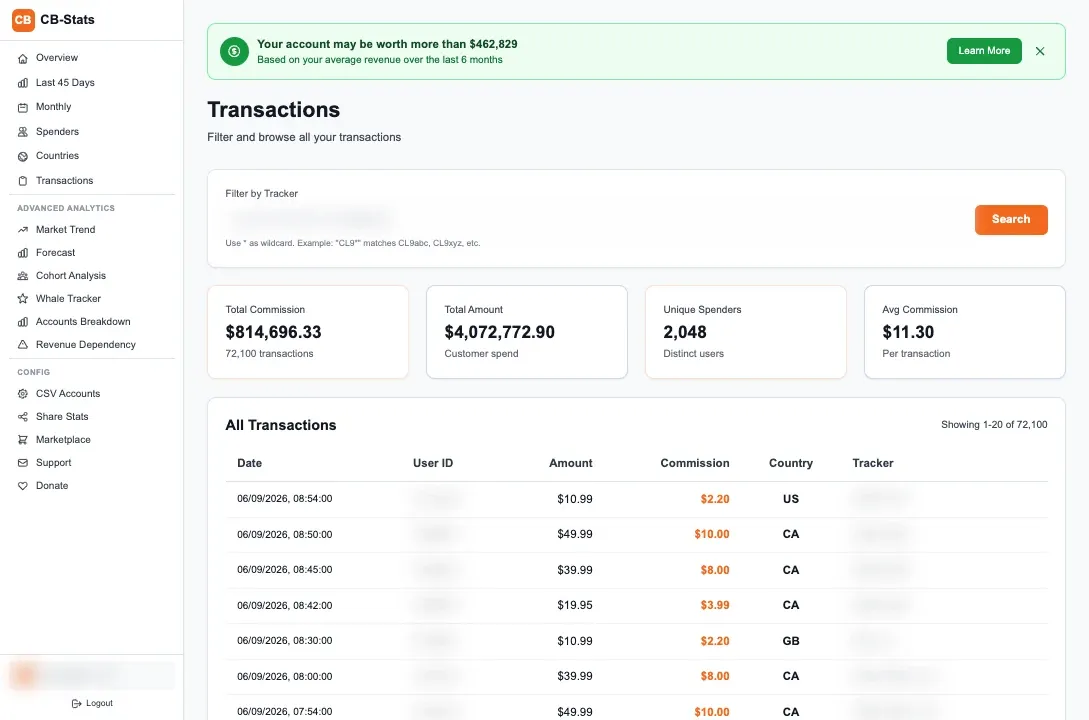
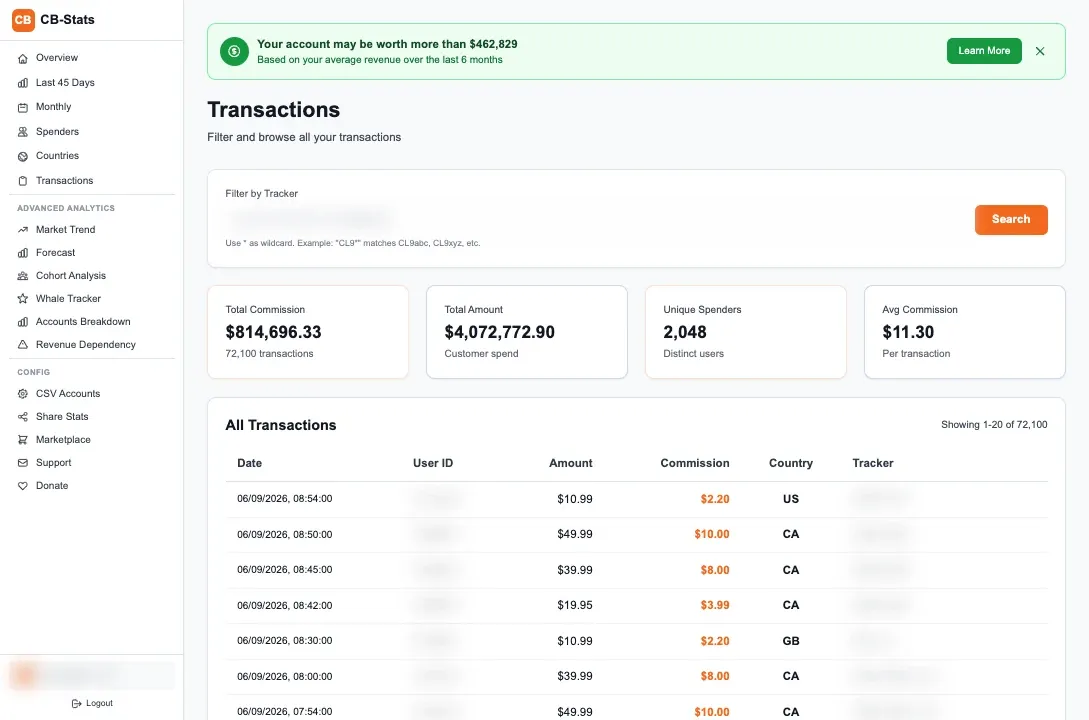
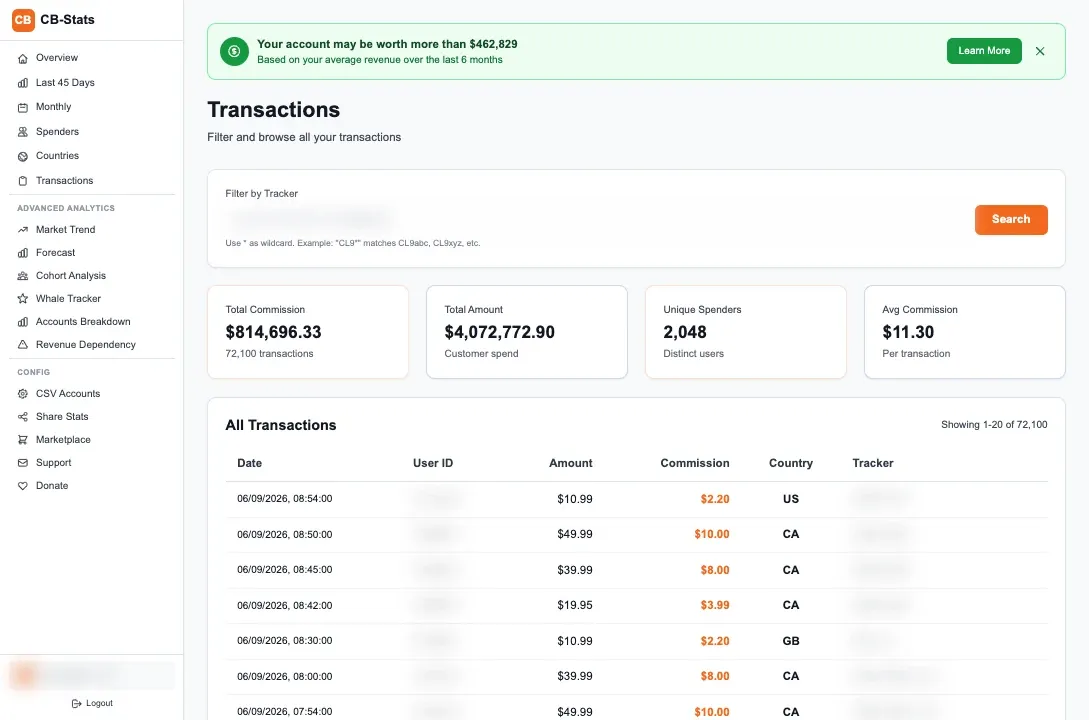
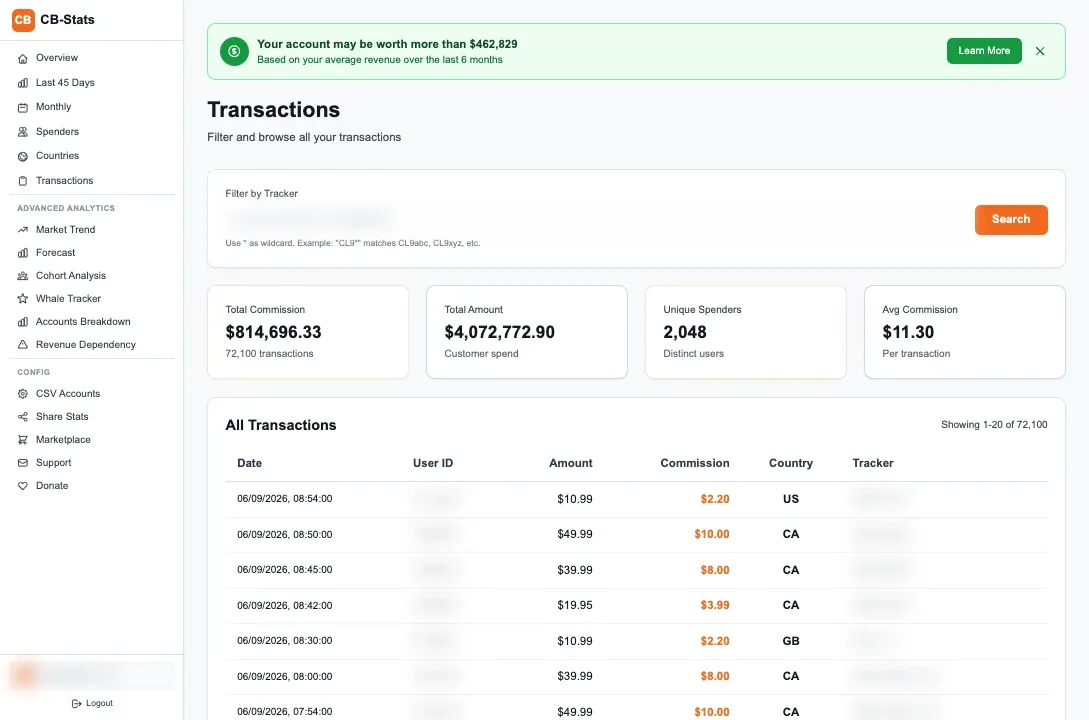
| Signup conversion | Chaturbate affiliate panel + CB-Stats | 15-25% of clicks | Whether the traffic quality matches the platform |
| Revenue per page | CB-Stats tracker breakdown | $50+/month per page | Whether the content generates actual commissions |
| Time on page | Google Analytics | 3+ minutes | Whether readers engage with the content or bounce |
Revenue attribution with tracker tags
Frequently Asked Questions
Is adult affiliate marketing profitable?
Yes. Adult affiliate marketing is one of the most profitable niches because of lifetime revshare models. Chaturbate pays 20% of all referred user spending forever. A single active spender can generate $200-$500+ in lifetime commission. The top Chaturbate affiliates earn $10,000-$50,000+ per month. Profitability depends on content quality and traffic volume, with most affiliates needing 6-12 months of consistent publishing before seeing meaningful revenue.
Does OnlyFans have an affiliate program?
OnlyFans had a referral program for creators but shut down their public affiliate program for promoters in 2022. There is no way to earn commissions by referring paying subscribers to OnlyFans as a third-party affiliate. Chaturbate, Stripchat, and BongaCams all have active affiliate programs with lifetime revshare. Chaturbate pays 20%, which is the highest rate among major cam platforms.
What content converts best for adult affiliate sites?
Comparison articles convert at 5-8% because readers are in decision mode. Platform reviews convert at 3-5% and build trust through branded keyword rankings. How-to guides targeting purchase-intent keywords (like "how to buy tokens") convert at 2-4% but attract high-quality spenders. A mix of all 3 content types produces the best overall results.
How often should I publish on an adult affiliate site?
8-12 articles per month is the sweet spot. Below 8, Google treats your site as low-activity and crawls it less. Above 15, quality drops unless you have a team. A split of 40% reviews, 30% comparisons, 20% how-to guides, and 10% listicles covers the full range of search intent for cam affiliate keywords.
Can I use AI to write adult affiliate content?
You can use AI for outlines and first drafts, but publishing raw AI output without editing risks penalties within 2-3 months. Google scrutinizes adult affiliate sites more heavily than mainstream niches. Every article needs personal experience, original screenshots, specific numbers, and genuine opinions added by a human editor. The rewrite process adds about 30 minutes per article but produces content that holds rankings long-term.