Theory18Webmasters

Affiliate programs, traffic
& earnings.

Whale spender

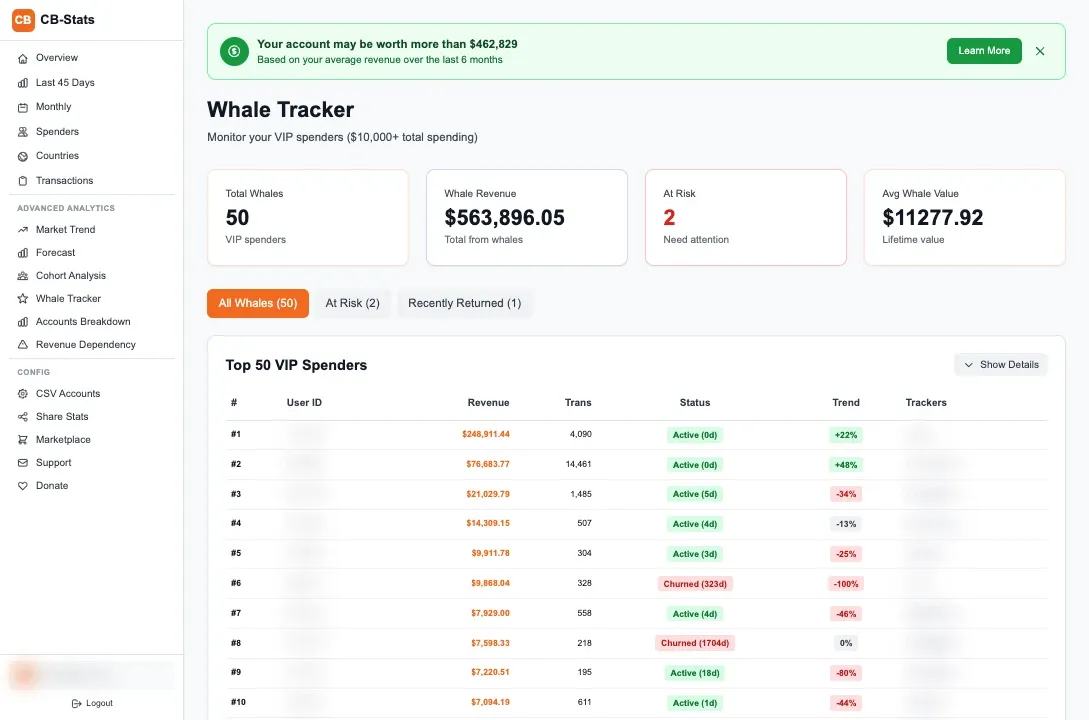
CB Stats whale activity overview with spender identities obscured.
Table of Contents

Definition

A whale spender is a referred user who has spent $10,000 or more in total on a cam platform, generating $2,000+ in commission for the referring affiliate.

Quick answer: A whale spender is a user who has spent $10,000+ total on a cam site. At 20% revshare, each whale generates at least $2,000 in affiliate commission.

Key takeaways

  • Whales typically represent 2-5% of paying referrals but can account for 30-50% of total affiliate revenue
  • CB-Stats tracks whale status indicators: active (spent in last 30 days), at-risk (30-59 days), danger (60-89 days), churned (90+ days)
  • Losing a single whale can drop monthly revenue by 10-25% depending on portfolio size
  • The best traffic sources for whales are search-intent keywords in tier-1 geos, not social or viral traffic

What makes someone a whale spender

A whale is any referred user whose total token purchases exceed $10,000, which at 20% revshare means they have earned you at least $2,000 in commission. These are not casual viewers. They are repeat buyers who come back weekly or even daily, often spending $200-$500 per session on tips and private shows.
In my affiliate portfolio of about 14,000 paying referrals, roughly 180 qualify as whales. That is 1.3% of paying users. But those 180 accounts generate around 38% of my total monthly commission. When a whale goes quiet, I feel it in my next payout.

Why tracking whale activity changes everything

Knowing exactly which whales are active, slowing down, or gone tells you what your revenue will look like next month before the numbers come in. If 3 of your top 10 whales have not spent anything in 45 days, you are about to see a revenue drop. That early warning gives you time to adjust.
Most affiliates only look at total revenue and get surprised when it drops. They do not realize that one user stopping their $800/month spending habit is what caused the entire dip. Whale tracking removes that surprise.

WarningRevenue concentration risk

If more than 20% of your monthly commission comes from your top 5 whales, your income is fragile. Diversifying traffic sources to build a broader whale base reduces the impact of any single whale churning.

How CB-Stats monitors your whales

CB-Stats automatically identifies all users who have crossed the $10,000 spending threshold and assigns each one a status based on their last activity date. The four statuses are: active (spent in the last 30 days), at-risk (30-59 days since last spend), danger (60-89 days), and churned (90+ days with no activity).
The whale tracker page shows your top 50 VIP spenders ranked by total spending. Each whale card includes their 6-month spending trend with percentage change, so you can see whether they are ramping up or winding down. There are tabs to filter by All Whales, At Risk, and Recently Returned.

Where whales come from

In my experience, whales overwhelmingly come from organic search traffic in the US, UK, and Germany. They find specific models or niches through Google, sign up with intent to spend, and become regulars. I have never gotten a whale from a TikTok link or a Reddit post. High-intent search traffic is the whale factory.
Tracker links help you confirm this. When you tag each traffic source separately, CB-Stats shows which trackers produce users that eventually become whales. That data should drive where you spend your time building content and backlinks.

Frequently Asked Questions

How many whales should I expect from my referrals?

Roughly 1-3% of paying referrals become whales over time. If you have 1,000 paying referrals, expect 10-30 whales. The percentage depends on your geo mix and traffic intent. US search traffic produces whales at a higher rate than developing-market social traffic.

Can I do anything when a whale is flagged as at-risk?

You cannot contact the user directly since cam platforms do not share user contact info with affiliates. But you can use whale churn patterns to identify which traffic sources produce more loyal high-spenders and shift resources toward those sources.

What is the difference between a whale and a regular high spender?

CB-Stats uses $10,000 in total spending as the whale threshold, which translates to $2,000+ in affiliate commission at 20% revshare. Users who spend $1,000-$9,999 are high spenders but not whales. The whale designation marks users whose individual activity meaningfully impacts your revenue.

Theory18 community

Join the conversation

Loading comments…